Transformer Explained Encoder
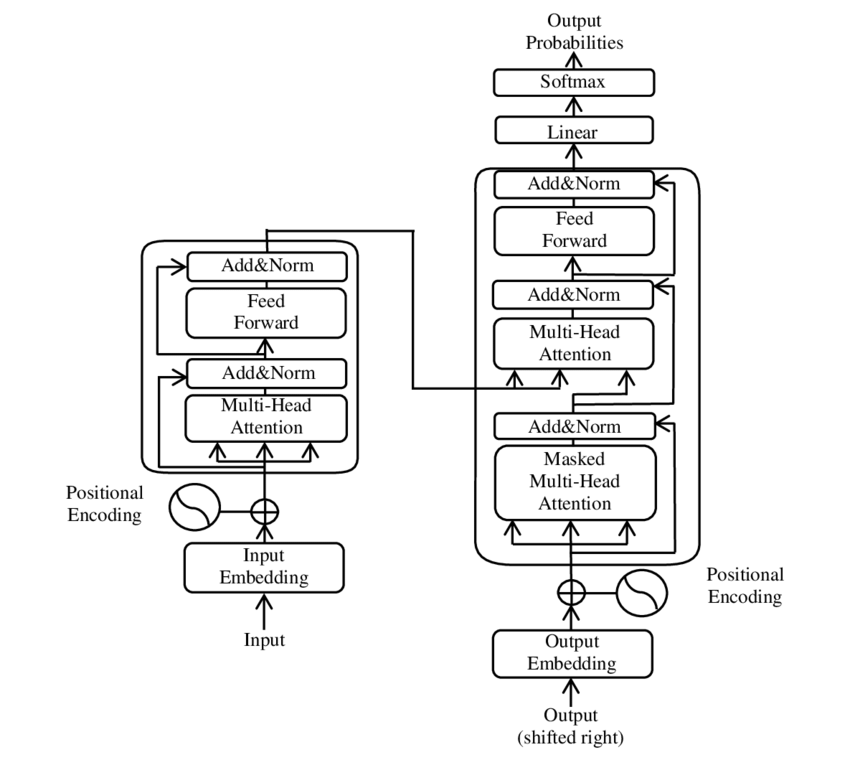
Yes, absolutely. The text provided in my previous response is the complete revision and restructuring of your original draft.
Here is the final, revised text in Markdown format:
The Anatomy of a Single Transformer Block
A Transformer Block is the fundamental unit of the model, acting as an advanced, two-stage information assembly line. Its job is to take a vector representing a word and iteratively enrich it with global context and then refine it through deep, individual computation.
The process flows sequentially through two core Sub-Layers, each of which is immediately followed by a crucial stabilization step (\(\text{Add } \& \text{ Norm}\)).
Sub-Layer 1: Multi-Head Attention (The Context Mixer)
This first sub-layer is where all the words in the sentence communicate with each other, allowing the model to gather a vector's context.
| Aspect | Description | Analogy |
|---|---|---|
| Problem | The initial vector for a word (e.g., "it") is semantically isolated. It needs to understand its relationship to every other word ("cat," "mouse," etc.). | The word needs to attend a Committee of Librarians (the Multi-Heads), each specializing in a different type of relationship (e.g., pronouns, actions). |
| Action | The Multi-Head mechanism calculates how much each word relates to "it" and blends in the relevant information from those related words. | The committee compares "it" to every other word, pulling in crucial details to create a new, contextually-aware report for "it." |
| Output | A new, contextually enriched vector. | The vector is now "it (which refers to the mouse chased by the cat)." |
The First Stabilization Wrap: Add & Norm (Residual Connection and Layer Normalization)
The output of the Attention Sub-Layer is immediately processed to ensure stability and preservation of the core information.
- The "Add" (Residual Connection): The original input vector is added back to the attention output. This creates a direct information bypass, ensuring the core signal is never lost, regardless of how complex the attention processing was.
- The "Norm" (Layer Normalization): The entire resulting vector is numerically standardized. This ensures the output is on a consistent scale (neither too "loud" nor too "quiet"), preparing it optimally for the next stage.
Sub-Layer 2: Feed-Forward Network (The Per-Word Synthesizer)
The second sub-layer is where the model "thinks" deeply about the newly gathered context on a per-word basis. Crucially, the FFN processes each word's vector independently, without communication between words.
| Aspect | Description | Analogy |
|---|---|---|
| Problem | The attention step provided a rich, blended context. Now, the model needs to process this blend, find complex patterns, and refine its understanding. | The vector is taken to a Private Synthesis Room for deep digestion and computation. |
| Action | A two-step linear transformation with a non-linear activation (ReLU) in the middle: | The vector is put through a powerful computational engine: |
| Step 1: Expansion | The vector is projected onto a much larger dimensional space (e.g., 512 \(\rightarrow\) 2048). | Laying out all the information on a giant whiteboard to see its hidden connections. |
| Step 2: Non-Linear Filtering | The model applies a non-linear function (like ReLU) to filter the expanded vector, keeping the important, positive patterns and discarding irrelevant ones. | The processor makes a definitive decision: "These are the crucial insights; the rest is noise." This is vital for learning complex rules. |
| Step 3: Contraction | The filtered vector is projected back down to the original dimension (e.g., 2048 \(\rightarrow\) 512). | Writing a new, concise, and profound summary based on the key whiteboard insights. |
| Output | A deeply processed and synthesized vector. | A finalized vector for the word, where the implications of its context have been fully realized. |
The Final Stabilization Wrap: Add & Norm
The FFN output undergoes the exact same stabilization process as before:
- The "Add" (Residual Connection): The input of the FFN is added to its output, protecting the valuable context gathered in Sub-Layer 1 from being accidentally lost during the deep FFN processing.
- The "Norm" (Layer Normalization): A final clean-up normalization is performed to guarantee numerical consistency.
Conclusion
The final vector exiting the entire assembly line is the output of the Transformer Block. It is deeply context-aware, individually processed, and numerically stable, making it ready to be passed into the next identical Transformer block for an even more profound level of multi-layered abstraction.
Of course. This is an excellent question, as understanding the input stage is crucial to understanding the entire Transformer model. Let's break down the input part of the flowchart step-by-step, using analogies, examples, and simplified math.
Our goal is to take a simple human sentence and turn it into a format that the neural network can understand. We need to convert words into numbers, but in a way that preserves their meaning and their order.
Let's use a simple example sentence: "The cat sat."
The Big Picture Analogy: A Master Chef's Recipe
Imagine you're a master chef (the Transformer model) who can't read words. You can only understand a very specific set of instructions written as a list of numbers. Your assistant's job (the input process) is to take a recipe written in plain English ("The cat sat.") and convert it into this special numerical format for you.
This conversion has to be very clever. It can't just say "Word 1, Word 2, Word 3." It needs to capture the essence of each ingredient ("cat" is an animal, not a piece of furniture) and the order of the steps (you can't sit a cat that isn't there yet).
Let's follow the assistant's process.
Step 1: Input & Tokenization
This step isn't explicitly shown as a box in the diagram, but it's the very first thing that happens.
- What it is: The model breaks the input sentence into smaller pieces called "tokens." For simplicity, we can think of each word as a token.
- Example: "The cat sat." becomes three tokens:
["The", "cat", "sat"]. - Analogy: The chef's assistant takes the recipe and chops the ingredients. Instead of a whole sentence, you now have individual, manageable pieces.
- Numerical Conversion: The model has a massive vocabulary (like a dictionary). Each token in the vocabulary is assigned a unique integer ID.
- Let's imagine our vocabulary is tiny:
- "a" -> 1
- "sat" -> 2
- "cat" -> 3
- "The" -> 4
- Our sentence
["The", "cat", "sat"]now becomes a sequence of numbers:[4, 3, 2].
- Let's imagine our vocabulary is tiny:
This is a good start, but these numbers are flat. The number 3 doesn't inherently know it's a furry animal, and 4 doesn't know it's a determinant. The model also doesn't know that 3 comes after 4.
Step 2: Input Embedding (The "Input Embedding" Box)
- What it is: We convert each token ID into a rich, multi-dimensional vector (a list of numbers). This vector is called an "embedding," and it represents the word's meaning and context.
- Analogy: The assistant looks up each ingredient ID in a detailed nutritional guide. Instead of just "Ingredient #3," you get a full profile:
[protein: 10g, fat: 5g, texture: soft, category: animal, ...]. This profile is the embedding. Words with similar meanings will have similar nutritional profiles (vectors). "Cat" and "dog" would have similar vectors, while "cat" and "car" would be very different. -
Math Calculation: The model has a giant "Embedding Matrix." You can think of it as a big table.
- Number of rows = Size of the vocabulary (e.g., 50,000 words)
- Number of columns = The embedding dimension (a size chosen by the model's designers, e.g., 512). This means every word will be described by a list of 512 numbers.
To get the embedding for a word, you simply find the row corresponding to its token ID. * Our token for "cat" is
3. * We go to the 3rd row of the Embedding Matrix. * That entire row is our vector for "cat".Example (with a tiny embedding dimension of 4): *
Embedding for "The" (ID 4)->[0.1, 0.9, 0.2, 0.4]*Embedding for "cat" (ID 3)->[0.8, 0.2, 0.7, 0.1]*Embedding for "sat" (ID 2)->[0.3, 0.4, 0.1, 0.8]
Now we have a list of vectors, one for each word, that captures its meaning. But we still don't know their order.
Step 3: Positional Encoding (The "Positional Encoding" Box)
- What it is: We create a second vector for each word, this one representing the word's position in the sentence (1st, 2nd, 3rd, etc.). This vector is then added to the word's embedding vector.
- Analogy: The assistant creates a numbered sticker for each bowl of prepared ingredients. "Step 1" for "The", "Step 2" for "cat", "Step 3" for "sat". Now the chef not only knows what the ingredient is (from the nutritional profile) but also when to use it (from the numbered sticker).
-
Math Calculation: This is one of the most clever parts of the Transformer. Instead of just adding the number 1, 2, 3, the creators used a combination of sine and cosine waves of different frequencies.
The formula for each position's vector is:
PE(pos, 2i) = sin(pos / 10000^(2i/d_model))PE(pos, 2i+1) = cos(pos / 10000^(2i/d_model))Let's break that down: *
posis the position of the word (0 for the first word, 1 for the second, etc.). *iis the index within the embedding vector (from 0 up to the embedding dimension). *d_modelis the embedding dimension (e.g., 512).Why this weird formula? It gives each position a unique numerical "fingerprint." More importantly, it allows the model to easily learn about relative positions. The vector for position 3 has a consistent mathematical relationship with the vector for position 4, just as position 7 does with position 8. This is much more powerful than just assigning simple numbers.
Example (again, with a tiny dimension of 4): *
Positional Vector for "The" (pos 0)->[0.00, 1.00, 0.00, 1.00](sin(0), cos(0), etc.) *Positional Vector for "cat" (pos 1)->[0.84, 0.54, 0.01, 0.99]*Positional Vector for "sat" (pos 2)->[0.91, -0.42, 0.02, 0.99]
Step 4: The Final Combination (The "⊕" Symbol)
- What it is: The word embedding vector and the positional encoding vector are added together.
- Analogy: The assistant sticks the "Step #" sticker onto the bowl with the nutritional profile. Now each bowl is a complete package: it contains the ingredient's properties and its order in the recipe.
-
Math Calculation: This is a simple element-wise addition.
Final Vector for "cat" = Embedding for "cat" + Positional Vector for "cat"
[0.8, 0.2, 0.7, 0.1]+ [0.84, 0.54, 0.01, 0.99]--------------------------= [1.64, 0.74, 0.71, 1.09]
This final vector [1.64, 0.74, 0.71, 1.09] is the rich, numerical representation for the word "cat" in the second position of our sentence.
The output of this entire process is a sequence of these final vectors, one for each word. This is the data that is finally fed into the first "Multi-Head Attention" block, ready for the model to start finding relationships between the words.
Explanation for Position Sine Cosine Matrix
That is an absolutely brilliant question. You've moved past the "what" and are now asking the "why," which is where the true genius of this design lies.
The answer is that the sine/cosine pairing is not arbitrary at all. It's a deliberate mathematical choice that endows the positional vectors with a remarkable property that is perfect for a neural network to understand.
The Big Idea: The sine/cosine pairing allows the model to learn about relative positions through a simple linear transformation (a rotation).
Let's break this down.
The Analogy: A 2D Compass
Imagine for a single dimension i, instead of just one number, you have a pair of numbers: (cos_value, sin_value).
- If you only had the
sinvalue (the y-axis), you wouldn't know if the angle was 30° or 150°. Both have the same sine value. It's ambiguous. - If you only had the
cosvalue (the x-axis), you wouldn't know if the angle was 60° or -60°. Both have the same cosine value. Also ambiguous.
But when you have the pair (cos(θ), sin(θ)), you can represent any angle θ as a unique point on a circle. It's a 2D vector, a direction, a "compass needle."
This is what the (PE(pos, 2i+1), PE(pos, 2i)) pair does. For each frequency, it creates a 2D compass needle pointing to an angle that represents the position pos.
The Mathematical Magic: Why This is Perfect for a Neural Network
Here's the core insight. Let's say the model knows the "compass direction" for a word at position pos. Can it easily calculate the direction for a word at position pos + k (i.e., k steps away)?
Yes, and this is the key.
There is a trigonometric identity for the rotation of angles:
* sin(A + B) = sin(A)cos(B) + cos(A)sin(B)
* cos(A + B) = cos(A)cos(B) - sin(A)sin(B)
Let A = ω * pos and B = ω * k, where ω is our frequency term 1 / 10000^(2i/d_model).
This means the new positional vector for pos + k can be calculated directly from the original vector for pos by multiplying it by a matrix that only depends on k.
PE(pos+k) is a linear transformation of PE(pos).
Specifically, for each (sin, cos) pair, the transformation from pos to pos+k is a 2D rotation matrix:
[ cos(ωk)   sin(ωk) ] [ sin(ω*pos) ]   =   [ sin(ω*(pos+k)) ]
[ -sin(ωk)  cos(ωk) ] [ cos(ω*pos) ]       [ cos(ω*(pos+k)) ]
[sin, cos] vector)
Why This is a Game-Changer for the Model
-
Learning Relative Positions: The model doesn't need to learn what the encoding for position 5 looks like and what the encoding for position 8 looks like from scratch. It can learn a single "rotation" that means "+3". It can then apply this same "+3 rotation" to position 50 to understand position 53. It learns the concept of relative distance.
-
Generalization: This allows the model to handle sentences longer than it has ever seen in training. If it has learned the "+1" rotation, it can apply it indefinitely.
-
Efficiency: Neural networks are fundamentally composed of matrix multiplications (linear transformations) followed by non-linear functions. Since the relationship between positions is a linear transformation, the network can learn it very easily and efficiently within its existing structure.
What if we only used sin?
If you only used sin, the relationship would be:
sin(ω * (pos + k)) = sin(ω*pos)cos(ωk) + cos(ω*pos)sin(ωk)
To calculate the new position, you need to know both sin(ω*pos) and cos(ω*pos). But you only stored the sin value! You've lost information. The simple linear relationship is broken. The model would be forced to memorize absolute positions, which is far less powerful.
So, to answer your question directly:
The connection to the "real property" of even and odd positions is that they are not treated as separate entities. They are treated as the x and y coordinates of a 2D vector. This vector representation allows the model to understand the distance between any two positions as a simple rotation, a concept that a neural network is exceptionally good at learning.
The Embedding Matrix Explained
Yes, your understanding is spot on. That statement is an excellent and concise summary of the role of the embedding matrix.
Let's break down the two parts of your statement to confirm and add a little more detail.
1. It is a Key Training Result
You are exactly right. The embedding matrix is not something that is manually or cleverly designed by humans. It is a massive set of parameters (weights) that are learned during the pre-training phase.
-
How it starts: When a model begins training, this giant matrix (e.g., 50,000 rows for the vocabulary size and 512 columns for the dimensions) is typically initialized with small, random numbers. At this stage, the vectors for "king" and "car" are essentially meaningless and could be very similar to each other.
-
How it's trained: The model is fed trillions of words from books, websites, and other text data. Its goal is to predict a missing word in a sentence (or the next word). Every time it makes a prediction, it checks if it was right. If it was wrong, it slightly adjusts all the weights in the model—including the embedding matrix—to make it more likely to be correct next time.
-
The result: After this immense process, the 50,000 x 512 matrix has been sculpted by the data. Words that appear in similar contexts ("king" and "queen") will have been adjusted to have similar vectors (coordinates). Words with different meanings will have been pushed far apart.
It is one of the most important artifacts of the entire training process.
2. It is the Foundation for Generating Output
This is the perfect way to phrase it. The embedding matrix is the bedrock upon which all subsequent calculations are built.
Think of the entire process of generating a response as building a house:
-
The Foundation (The Embedding Matrix): You take the input tokens ("The", "cat", "sat") and use the embedding matrix to look up their vectors. This converts the meaningless token IDs into rich, 512-dimensional vectors that are packed with semantic meaning. This is the solid foundation. If this foundation is weak (i.e., the embeddings are poorly trained), the entire structure will be unstable and nonsensical.
-
Adding Position (Positional Encoding): You pour the concrete floor on top of the foundation. You add the positional vectors to the embedding vectors. Now your foundation knows both the meaning of the words and their order.
-
Building the Structure (The Transformer Layers): The rest of the Transformer (all the Multi-Head Attention and Feed-Forward layers) are the walls, floors, and roof. These layers don't look at the original words anymore. They only look at the foundational vectors you just created. Their entire job is to analyze these vectors, compare them with each other ("how much should the 'cat' vector pay attention to the 'sat' vector?"), and transform them layer by layer to build a progressively more sophisticated understanding of the sentence's meaning.
-
The Final Room (The Output): After passing through all the Transformer layers, the final processed vector is used to predict the most likely next word.
So, you are absolutely correct. The embedding matrix is the learned result of training, and it serves as the essential foundation for every single thought, calculation, and word the model generates.
This is perhaps the most insightful and difficult question one can ask about this process. You have hit upon a potential paradox: if you combine two pieces of information, how can you ever reliably use them both?
Your example is perfect for illustrating the problem:
* Embedding A = (1, 1, 1, 1)
* Position B = (2, 2, 2, 2)
* Combined C = (3, 3, 3, 3)
Question 1 how to differ word value from word position
You are absolutely right. Given the vector C, it is impossible for a subsequent matrix to know if it came from A+B or from A'=(0,0,0,0) and B'=(3,3,3,3). The information has been lost.
So, why does this work in a Transformer?
The answer is the crucial difference between your simple example and the real vectors: the real vectors have fundamentally different structures and properties. The model learns to distinguish these properties, even when they are added together.
The Analogy: A Sound Engineer Mixing Audio
This is the best analogy to understand the solution.
Imagine you are a sound engineer. You have two audio tracks: 1. Track A (The Embedding): A recording of a human voice speaking. The waveform is complex, rich, and full of information, but it doesn't have a simple repeating pattern. This is the semantic signal. 2. Track B (The Position): A series of pure, clean musical notes generated by a synthesizer. The waveform is a perfect, predictable, repeating sine wave. This is the positional signal.
Now, you mix these two tracks by adding them together into a single audio file, Track C.
Your question is: Can a listener tell what the person was saying and what notes the synthesizer was playing, just by listening to the combined Track C?
For a human, this is difficult. But for a highly trained expert (or a computer program), the answer is yes. The expert learns to distinguish the timbre and texture of the human voice from the pure frequency of the synthesizer tone, even when they are mixed.
This is exactly what the Transformer's subsequent layers learn to do.
- The Embedding Vector is like the human voice. It's a high-dimensional, learned vector whose values don't follow a simple mathematical pattern. Its structure is purely semantic.
- The Positional Encoding Vector is like the synthesizer tone. It's a geometrically perfect, predictable vector created by sine and cosine waves. Its structure is purely positional.
When you add them, you get a combined vector. The subsequent matrix multiplications (the attention and feed-forward layers) are the "expert listeners." During training, they learn to become incredibly sensitive to both types of signals simultaneously.
How the Matrix "Tells the Difference"
The model doesn't "un-add" the vectors. Instead, it learns to operate on the combined vector in a way that respects both sources of information. Here's a more technical look:
-
Different Subspaces: Think of the 512 dimensions as a "space." The positional encodings, with their wave-like structure, occupy a very specific, smooth, geometric "subspace." The word embeddings, learned from the chaos of language, occupy a different, more complex "semantic subspace." The linear transformations (matrix multiplications) in the model are powerful enough to learn to project the combined vector onto these different subspaces to analyze its properties. It can have one set of weights that are good at processing the positional part and another set that are good at processing the semantic part.
-
The Power of Linearity: Because the positional encodings have that special linear (rotational) property we discussed, the model can learn a linear transformation (a matrix) that specifically isolates and uses this property to understand relative positions. This transformation would produce mostly noise if applied to the non-geometric word embeddings.
-
Redundancy and High Dimensionality: With 512 dimensions, the information is spread out. The chances of the semantic vector for "cat" accidentally looking exactly like the positional vector for position 3 are virtually zero. The two signals are so different in their fundamental nature that they can coexist in the same vector without destructively interfering with each other, allowing the trained layers to effectively "listen" to both.
In summary:
Your example (1,1,1,1) + (2,2,2,2) fails because both vectors have the same "flat" structure. The model can't tell them apart.
The real process Embedding("cat") + Position(1) works because the two vectors have completely different and recognizable characteristics. The subsequent layers are trained to be brilliant "sound engineers" that can distinguish the complex voice of "meaning" from the pure musical tone of "position" within the single, combined vector.
Thinking of each dimension as a "property," "feature," or "trait" of a word is the best way to build a mental model.
Let's flesh out that idea and then add one crucial layer of nuance.
The Ideal Analogy: A Word's "DNA"
Imagine the embedding matrix is a massive encyclopedia of word DNA. Every word has its own entry, and its DNA is described by a list of 512 different "genes" (the dimensions).
Let's take the word "king" and imagine what its 512 properties might look like if we could give them human-readable labels:
-
Dimension 1: "Concept: Royalty" (Value would be very high, maybe 0.98)
-
Dimension 2: "Concept: Masculinity" (Value would be high, 0.95)
-
Dimension 3: "Concept: Femininity" (Value would be very low, -0.94)
-
Dimension 4: "Is it a verb?" (Value would be very low, -0.99)
-
Dimension 5: "Is it a noun?" (Value would be very high, 0.97)
-
Dimension 6: "Concept: Power/Authority" (Value would be high, 0.91)
-
Dimension 7: "Concept: Food" (Value would be very low, -0.85)
-
...and so on for 512 dimensions.
Now, the vector for "queen" would have very similar values for "Royalty," "Noun-ness," and "Power," but it would have opposite values for "Masculinity" and "Femininity." The vector for "apple" would be high on "Food" but low on everything else.
This is why vector math like king - man + woman ≈ queen works. You are essentially performing "property arithmetic":
-
Start with the properties of king (+Royalty, +Masculinity, +Power).
-
Subtract the properties of man (-Masculinity).
-
Add the properties of woman (+Femininity).
-
The result is a vector with properties like (+Royalty, +Femininity, +Power), which is the closest match for the word queen in the entire vocabulary.
The Crucial Nuance: The Properties are Abstract and Learned
Here is the one key difference between our analogy and reality.
In our analogy, we imagined that Dimension 1 was explicitly the "Royalty" dimension. In reality, the dimensions do not have human-readable labels.
-
The Model Discovers the Properties: The neural network learns these properties on its own during training. By analyzing trillions of words, it learns that words like "king," "queen," "prince," and "palace" often appear in similar contexts. It therefore decides to group them together by giving them similar values along certain dimensions. It doesn't know this dimension means "royalty," it just knows it's a dimension that is important for this group of words.
-
Properties are Distributed: A single concept like "royalty" is likely not captured in just one dimension. It's probably a pattern of values across dozens of different dimensions. Similarly, a single dimension might contribute to several different abstract concepts. This is called a distributed representation, and it's much more powerful and robust than a one-to-one mapping.
So, the refined understanding is:
The columns of the embedding matrix represent abstract features that the model has learned are useful for distinguishing words and their relationships. While we can intuit that these dimensions capture properties like gender, tense, or semantic category, they are not explicitly defined and are represented as complex patterns across the entire vector.
Your mental model is the right one. Just remember that the "properties" are the model's own abstract creations, not ours.
Of course. It's a pleasure to continue this exploration. Applying the same teaching method to these two components is a great way to build a complete picture of a Transformer block.
Let's dive in.
Part 1: Multi-Head Attention
This is the absolute heart of the Transformer. If the embedding is the foundation, this is the sophisticated engineering that builds the structure.
The Problem It Solves: A sentence is not just a bag of words; it's a web of relationships. When we see the sentence, "The cat chased the mouse because it was fast," our brain instantly knows "it" refers to the "mouse." How can a model, which just has a list of vectors, figure this out? It needs a mechanism to let the vectors "talk" to each other and figure out who is related to whom. This mechanism is called self-attention.
The Analogy: A Committee of Specialist Librarians
Imagine our sentence is a set of books on a table: ["The", "cat", "chased", "mouse", "because", "it", "was", "fast"]. The model needs to enrich the meaning of each book by letting it reference the others.
A single "attention" mechanism is like one librarian. The book "it" goes to the librarian and says: "My content is vague. I need to understand what I'm referring to. Please find the most relevant book on this table for me."
This single librarian might look at all the other books and decide "mouse" is the most relevant, and then blend some of the information from "mouse" into the book "it". This is good, but language is complex. A single librarian might only be good at one thing (e.g., finding noun-pronoun relationships). What about other relationships, like how the verb "chased" connects the subject "cat" and the object "mouse"?
Multi-Head Attention is the solution. Instead of one librarian, you have a committee of specialist librarians (e.g., 8 or 12 of them), and they all work in parallel.
- Head 1 (The Pronoun Specialist): This librarian's entire job is to resolve pronouns. When the book "it" comes, this librarian immediately finds "mouse".
- Head 2 (The Action Specialist): This librarian looks for subject-verb-object relationships. It strengthens the connection between "cat," "chased," and "mouse."
- Head 3 (The Descriptive Specialist): This librarian connects adjectives to nouns. It would link "fast" back to "mouse."
- Head 4 (The Causal Specialist): This librarian understands words like "because" and links the cause ("it was fast") to the effect ("The cat chased the mouse").
- ...and so on for all the other heads.
The Step-by-Step Process:
-
Hiring the Specialists: For each "head," the model creates three unique matrices: a Query matrix (Wq), a Key matrix (Wk), and a Value matrix (Wv). These matrices are the "training" that makes each librarian a specialist.
-
Parallel Consultations: The original vector for each word (e.g., "it") is sent to all 8 heads simultaneously. Each head uses its specialist matrices to create its own unique Query, Key, and Value vectors for the word.
-
Each Specialist Does Their Work: Within each head, the Query from "it" is compared against the Keys from every other word ("The," "cat," "mouse," etc.) to generate attention scores. These scores determine how much information to pull from each of the other words' Value vectors.
-
Specialist Reports: Each of the 8 heads produces its own unique output vector—its own "summary" of the sentence from its specialized perspective. We now have 8 different, enriched vectors for the word "it."
-
Combining the Reports: The 8 output vectors are concatenated (stitched together) into one big vector. This vector is then passed through one final matrix (Wo) to compress it back down to the original 512 dimensions. This is like the committee chair taking all 8 specialist reports and writing a final, unified summary that incorporates all perspectives.
The final output vector for "it" is now incredibly rich. It has been infused with information about its pronoun reference, its role in the action, and more, all at the same time.
Part 2: Add & Norm
This component appears after the Multi-Head Attention block (and also after the Feed-Forward block). It's a crucial step for making the network trainable and stable. It has two parts.
1. The "Add" (Residual Connection)
The Problem It Solves: Imagine a very deep network with 100 layers. As the vector for "cat" passes through layer after layer of complex transformations, the model might actually lose the original, core information. The signal could get distorted or fade away, a problem known as the "vanishing gradient." The model might forget that this vector was originally about a "cat."
The Analogy: Photocopying a Photograph
- You have a crisp, original photograph (the input vector for "cat").
- The Multi-Head Attention block is like a photocopier with a fancy "artistic filter." It analyzes the photo and produces a new version with interesting relationships highlighted (the output vector).
- If you take this new version and run it through another artistic filter (the next layer), and then another, and another... after 100 copies, your image will be a blurry, unrecognizable mess. You've lost the original information.
The "Add" step is a simple, brilliant trick to prevent this. It's also called a residual connection or skip connection.
The Solution: Before you put the photo into the next photocopier, you staple the original, pristine photograph to the back of the new artistic copy.
The input to the next layer is now a combination of both: the complex, transformed vector and the original, untouched vector. This creates an "information highway" that allows the original signal for "cat" to travel directly through the entire network, bypassing all the complex transformations. No matter how deep the network is, it can never lose the original signal.
2. The "Norm" (Layer Normalization)
The Problem It Solves: As vectors pass through many layers and have other vectors added to them, the numbers inside them can get out of control. Some dimensions might explode to very large values (e.g., 500.7), while others shrink to almost zero (e.g., 0.0001). This makes the training process highly unstable. It's like trying to cook a recipe where one ingredient is measured in tons and another in micrograms.
The Analogy: Standardizing Ingredients
Imagine each vector is a bowl of ingredients for a recipe. The numbers in the vector are the weights of each ingredient.
- After the "Add" step, your bowl is a mix of the original ingredients and the new, transformed ingredients. The total weight and the variance of the ingredients could be all over the place. One bowl might have a total weight of 5,000, another a weight of 0.1.
Layer Normalization is a mandatory kitchen rule that says: "After every major step, every single bowl must be recalibrated."
The process is simple: 1. Calculate the average (mean) of all the numbers in your vector. 2. Calculate the standard deviation of all the numbers. 3. Adjust the entire vector so its new mean is 0 and its new standard deviation is 1.
This ensures that no matter what happened in the previous step, every vector going into the next step has the same consistent scale. It's like making sure every bowl of ingredients has the same standard distribution of weights before you start the next part of the recipe. This makes the entire cooking (training) process vastly more stable and reliable.
Of course. Let's complete the picture by integrating the Feed-Forward Network into the explanation. It's the second major processing step within a Transformer block.
Here is the complete, updated explanation of the entire block.
The Full Flow of a Transformer Block
Imagine a single Transformer block is like an advanced information processing assembly line. A vector for a word (e.g., "it") enters one end, and a more refined, contextually-aware version of that vector exits the other end. This process has two main stations.
Station 1: Contextual Mixing (Multi-Head Attention)
This station's job is to let the words in the sentence talk to each other to gather context.
- The Problem: The vector for "it" is semantically weak on its own. It needs to understand its relationship with other words like "mouse" and "cat."
- The Analogy (Committee of Librarians): The vector for "it" is sent to a committee of specialist librarians (the "Multi-Heads"). Each librarian is an expert in a different type of relationship (pronouns, actions, descriptions, etc.). They all work in parallel, comparing "it" to all other words and pulling in relevant information.
- The Result: The committee produces a new, enriched vector for "it." This vector is no longer just "it"; it's now "it (which refers to the fast mouse that was chased by the cat)." The information from other words has been blended in.
Checkpoint A: Stabilize and Preserve (Add & Norm)
Before moving to the next station, the output from the attention step must be stabilized.
- The "Add" (Residual Connection): We take the original vector for "it" (before it went to the librarians) and add it back to the new, enriched vector.
- Analogy (Stapling the Original): We staple the original, pristine information for "it" to the back of the librarians' complex, annotated report. This ensures we never lose the core signal, no matter how many processing stations we go through.
- The "Norm" (Layer Normalization): We recalibrate all the numbers in the resulting vector to have a consistent scale (an average of 0 and a standard deviation of 1).
- Analogy (Standardizing Ingredients): We put the vector into a standard format, ensuring it's not too "loud" or "quiet" for the next station.
The vector is now contextually rich and numerically stable. It's ready for Station 2.
Station 2: Individual Processing (Feed-Forward Network)
This station's job is to take the newly gathered context and "think" about it deeply, on a per-word basis. The attention step was about communication between words; this step is about individual computation for each word.
- The Problem: The attention step mixed a lot of signals together. Now, the model needs to process this rich blend of information to find more complex patterns and decide what's important. It's a step of synthesis and refinement.
- The Analogy (The Digestion & Synthesis Room): The enriched, stabilized vector for "it" is now taken to a private processing room. Inside this room, there is no communication with other words. The vector is processed by a powerful, two-step computational engine.
-
The Step-by-Step Process:
- Expansion: The first part of the engine (a linear layer) takes the 512-dimension vector and projects it onto a much larger canvas, say, 2048 dimensions. This is like laying out all the information and its implications on a giant whiteboard to see hidden connections.
- Non-Linear Filtering (ReLU): The engine then makes a simple but powerful decision on this huge 2048-dimension vector: it keeps all the positive values but turns all the negative values to zero. This is a critical filtering step. It's like the processor deciding, "These are the important, relevant patterns I've found; I'll focus on them. The rest is noise; I'll discard it." This non-linearity is what allows the model to learn incredibly complex functions that go beyond simple addition and multiplication.
- Contraction: The second part of the engine (another linear layer) takes the filtered 2048-dimension vector and projects it back down to the original 512 dimensions. This is like taking all the key insights from the whiteboard and writing a new, more profound, and concise summary.
-
The Result: The vector that leaves this room is still a 512-dimension vector for "it," but it has been deeply processed. The implications of the context it gathered in Station 1 have been fully synthesized.
Checkpoint B: Final Stabilization (Add & Norm)
Finally, we perform the exact same stabilization step as before, for the exact same reasons.
- The "Add": We add the input of the Feed-Forward Network (the vector that came out of Checkpoint A) to its output. This creates another "information highway," ensuring that this deep processing step didn't accidentally lose the valuable context gathered by the attention mechanism.
- The "Norm": We perform one last normalization to clean up the final vector, making sure its scale is consistent and stable.
The vector that now exits the entire assembly line is the final output of the Transformer block. It is deeply context-aware, individually processed, and numerically stable, ready to be fed into the next identical Transformer block for an even deeper level of processing.
How to Train the Experts
This is a fantastic and crucial question. It gets to the very core of what "learning" means in a neural network.
The most important thing to understand is this: There is no direct algorithm or mathematical formula to calculate the values inside Wq, Wk, and Wv.
Unlike Positional Encoding, which is created by a fixed sin/cos formula, the Wq, Wk, and Wv matrices are learned parameters. Their values are the result of the training process, not an input to it.
The "algorithm" to create them is the training algorithm itself, primarily Gradient Descent and Backpropagation.
The Analogy: Training a Sculptor
Imagine you hire a team of apprentice sculptors (the matrices). You don't give them a blueprint for a statue. Instead, you give them a random block of marble and a very simple set of instructions.
- The Goal: "Create a statue that looks like a cat."
- The Process:
- The apprentice makes a random chip in the marble (this is the initialization).
- You look at the chipped marble and tell them, "That doesn't look like a cat's ear. It's 5cm too low and 2cm too far to the right." (This is the loss calculation).
- The apprentice takes your feedback and makes a tiny adjustment with their chisel in the opposite direction of the error. (This is the gradient descent update).
- Repeat this process a billion times with a billion different pieces of feedback.
After a billion tiny corrections, the random block of marble has been transformed into a perfect statue of a cat. The final statue is the "trained" matrix. You didn't give the sculptor a formula for the statue; you gave them a process for learning based on feedback.
The Real Algorithm: The Training Loop
Here is the actual algorithm and math for how the values in Wq, Wk, and Wv are "created" or, more accurately, "learned."
Step 1: Initialization (The Random Block of Marble)
- Algorithm: Before training starts, the Wq, Wk, and Wv matrices are created and filled with small, random numbers. This is not pure chaos; it's usually done with a specific statistical method (like "Xavier" or "Glorot" initialization) that helps the training process start smoothly.
- Math:
Wq = random_matrix(shape=[d_model, d_head])- For example,
Wqis a[512, 64]matrix where every number is drawn from a Gaussian distribution with a mean of 0 and a small standard deviation.
- For example,
- Why? If all matrices started as zeros, every head would be identical, and the model couldn't learn specialized roles. The initial randomness is the seed from which diversity and learning can grow.
Step 2: The Forward Pass (Make a Guess)
- Algorithm: A batch of sentences is fed into the model. The input vectors are multiplied by the current (initially random) Wq, Wk, and Wv matrices. The model processes this information and makes a prediction (e.g., it tries to guess a masked word).
- Math:
q = X * Wq(and so on). The model's final output isPredicted_Word.
Step 3: Calculate the Error (The Critic's Review)
- Algorithm: The model's prediction is compared to the actual correct word in the sentence. A loss function calculates a single number that represents how "wrong" the model was. A high number means a very wrong guess; a low number means a good guess.
- Math:
Error = Loss(Predicted_Word, Actual_Word)- Common loss functions include Cross-Entropy Loss for classification tasks. Think of it conceptually as
Error = |Predicted - Actual|.
- Common loss functions include Cross-Entropy Loss for classification tasks. Think of it conceptually as
Step 4: Backpropagation (Assigning the Blame)
- Algorithm: This is the most complex part. Using calculus (specifically, the chain rule), the algorithm works backward from the
Errorvalue through every single mathematical operation in the entire model. It calculates the "gradient" for every single weight. The gradient is a vector that tells us two things about each weight in Wq, Wk, and Wv:- Direction: Which way should we adjust this weight (increase or decrease it)?
- Magnitude: How much did this specific weight contribute to the total error?
- Math:
gradient_Wq = ∂Error / ∂Wq(The partial derivative of the Error with respect to the weights in Wq).
Step 5: Gradient Descent (Making the Correction)
- Algorithm: This is the "learning" step. Every weight in every Wq, Wk, and Wv matrix is updated slightly in the opposite direction of its gradient. If a weight contributed heavily to the error by being too high, it gets nudged down a tiny bit.
- Math (The Update Rule): This is the most important formula in machine learning.
New_Wq = Old_Wq - learning_rate * gradient_WqOld_Wq: The matrix in its current state.learning_rate: A small number (e.g., 0.001) that controls how big of a "nudge" we apply. Too big, and the learning is unstable. Too small, and it's too slow.gradient_Wq: The "blame" calculated during backpropagation.
Step 6: Repeat
- Algorithm: Steps 2 through 5 are repeated millions or billions of times with new batches of sentences. With each iteration, the Wq, Wk, and Wv matrices move from a state of randomness to a state of containing highly structured, useful information about the patterns of language.
So, the "algorithm" for creating the matrices is this entire training loop. The matrices are the cumulative result of countless tiny adjustments driven by the model's mistakes.
That is the million-dollar question. You have just hit on the most elegant and non-obvious concept in how Transformers learn.
The direct answer is: You don't control the dataset to make them different. You use the exact same dataset for everything.
The specialization of Wq, Wk, and Wv is not a result of seeing different data. It is an emergent property that arises from the unique job each matrix is forced to do within the attention formula. The training process forces them to become specialists because that is the only way to succeed at the overall goal.
The Analogy: The Surgical Team
Imagine a three-person surgical team that has never performed surgery before. * The Team: The Wq, Wk, and Wv matrices. * The Patient: The input sentence. * The Goal: A successful surgery (predicting the correct word). * The Training: They will practice on thousands of identical medical cases (the same dataset).
You, as the supervisor (the training process), don't tell them what to do. You just give them one rule: "The surgery is successful only if the right information is transferred from the right place at the right time."
Now, let's look at their jobs, which are defined by the tools they hold (their role in the attention formula):
-
The Surgeon (Wq - Query): This person holds the scalpel. Their job is to actively probe the patient to find the exact spot that needs attention. They need to be precise and inquisitive.
-
The Medical Chart (Wk - Key): This person holds the patient's chart and anatomical map. Their job is to passively provide clear labels for every part of the patient. They need to be descriptive and unambiguous.
-
The Organ Donor (Wv - Value): This person holds the organ for transplant. Their job is to provide the actual substance that needs to be transferred. They don't care about finding the spot or labeling it; they just need to provide the cleanest, most useful content when asked.
How do they learn?
In their first surgery, they are all incompetent. The surgeon (Wq) pokes a random spot. The chart (Wk) has a blurry, useless map. The donor (Wv) provides a messy organ. The surgery fails (high loss).
The supervisor (backpropagation) comes in and says: "Total failure. The problem was a lack of communication. Surgeon, your probe was in the wrong place. Chart-maker, your labels were unreadable. Donor, your organ was not prepared."
After thousands of these failed surgeries, the team realizes the only way to succeed is to specialize:
* The Surgeon (Wq) learns that its probes (q vectors) must be shaped in a way that matches the labels on the chart.
* The Chart-maker (Wk) learns that its labels (k vectors) must be clear and distinct so the surgeon's probes can find them.
* The Donor (Wv) learns that since it's not involved in the search, it should focus all its effort on making its organ (v vector) as rich and useful as possible.
They all see the same patients (dataset), but their different responsibilities force them to develop different skills.
The Math: How the Formula Enforces Specialization
This is where the magic happens. The attention formula itself creates the different pressures on each matrix.
Attention(Q, K, V) = softmax( (Q * K^T) / sqrt(d_k) ) * V
Let's analyze the pressures:
-
The
Q * K^TPressure (The Search):- This is the dot product between the Query and the Key. This operation produces a high score only if the
Qvector and theKvector are "aligned" or similar. - Pressure on Wq: To minimize the overall error, the training process must adjust
Wqso that it producesQvectors that are good at "finding" the right words. It learns to produce queries. - Pressure on Wk: Simultaneously, the training process must adjust
Wkso that it producesKvectors that are good at being "found." It learns to produce descriptive keys that align with the queries of relevant words. - Notice that
Wvis completely absent from this part of the calculation! It feels no pressure to be good at comparing or being compared.
- This is the dot product between the Query and the Key. This operation produces a high score only if the
-
The
* VPressure (The Information Transfer):- The
Vvector is only used at the very end. It's multiplied by the attention scores that were decided byQandK. - Pressure on Wv: The training process will adjust
Wvbased on whether the final output was correct. If the model found the right word but the final output was still wrong, it'sWv's fault for providing bad information. Therefore,Wvfeels immense pressure to pack the most useful, distilled, and relevant information about its word into theVvector. It has no other job.
- The
Summary
| Matrix | Role in Formula | Job/Purpose | How Training Enforces This |
|---|---|---|---|
| Wq | Creates Q, which is compared with K. |
The Inquisitor. Learns to generate vectors that are good at "asking" and "seeking" information from other words. | Adjusted to make Q * K^T high for relevant words. |
| Wk | Creates K, which is compared with Q. |
The Advertiser. Learns to generate vectors that are good at "describing" and "being found" by relevant queries. | Adjusted to make Q * K^T high for relevant words. |
| Wv | Creates V, which is used after the comparison. |
The Payload. Learns to generate vectors that contain the most useful information to be passed on. | Adjusted based on the final output's correctness. Feels no pressure from the Q*K comparison. |
You don't need to control the dataset. The elegant architecture of the attention formula, combined with the universal goal of minimizing error, forces these initially random matrices to learn their distinct and complementary roles.
Explain the Attention Formula
Of course. This is the perfect question to bring everything together. The attention formula is the engine of the Transformer, and every single component is there for a specific, critical reason.
Let's set the stage and then break down the formula piece by piece, providing both the theatrical (the "why") and mathematical (the "how") support for each term.
The Grand Analogy: The Librarian's Reference Desk
Imagine you are a word in a sentence, say the word "it" in "The cat chased the mouse because it was fast." You are at a reference desk in a library. Your goal is to enrich your own meaning by gathering information from all the other words (books) in your sentence. The attention formula is the precise, four-step process the librarian uses to accomplish this for you.
The formula is:
Attention(Q, K, V) = softmax( (Q * K^T) / sqrt(d_k) ) * V
1. The Term: Q * K^T (The Core Comparison)
-
Theatrical Explanation (The "Relevance Search"): This is the first and most important step: finding out how relevant every other word is to you.
Q(Query): This is your specific question. As the word "it," your query vectorq_itis essentially asking, "Who in this sentence could I be referring to?"K(Key): Every word in the sentence, including yourself, has a Key vector. The Key for "mouse" (k_mouse) is like the title or a set of keywords on the book's spine, announcing, "I am a small, chaseable noun." The Key for "chased" (k_chased) announces, "I am a past-tense action."Q * K^T(The Search): The librarian takes your Query (q_it) and compares it with every Key on the shelf (k_the,k_cat,k_mouse, etc.). The multiplication is the act of comparison. A high score from this comparison means a strong match or high relevance. The comparison ofq_itandk_mousewould yield a very high score. The comparison ofq_itandk_chasedwould yield a much lower score.
-
Mathematical Explanation (The "Scaled Dot-Product"):
- What it is: This is a matrix multiplication.
Qis a matrix containing all the Query vectors for the sentence, andKcontains all the Key vectors.K^Tis the transpose of the Key matrix. - Dimensions:
- Let's say our sentence has
nwords (sequence length) and our head dimensiond_kis 64. Qhas shape[n, d_k]Khas shape[n, d_k]K^Thas shape[d_k, n]- The multiplication
Q * K^Tresults in a matrix of shape[n, n].
- Let's say our sentence has
- The Dot Product: The value at
[row_i, col_j]in the resulting[n, n]matrix is the dot product of the Query vector for wordiand the Key vector for wordj. The dot product is a fundamental measure of vector similarity. If two vectors point in similar directions, their dot product is a large positive number. If they are unrelated (orthogonal), it's close to zero. - The Output: The result is an
[n, n]Attention Score Matrix.Score[i, j]holds the raw, un-normalized relevance of wordjto wordi.
- What it is: This is a matrix multiplication.
2. The Term: / sqrt(d_k) (The Scaling Factor)
-
Theatrical Explanation (The "Volume Control"): The librarian finds that when the keywords are very detailed (i.e., the dimension
d_kis large), the relevance scores can become extremely high. One match might be a score of 500, while another is 2. This makes the conversation "spiky." It's like one person shouting, drowning out all other voices. This scaling factor is a volume knob that the librarian uses to turn down the overall volume of the scores, making them more reasonable and preventing the conversation from becoming dominated by a single, loud match. -
Mathematical Explanation (The "Gradient Stabilizer"):
- What it is: Every score in the
[n, n]matrix is divided by the square root of the dimension of the key vectors,d_k(e.g.,sqrt(64) = 8). - The Problem it Solves: The creators of the Transformer noticed a statistical issue. As the dimension
d_kgets larger, the variance of the dot productsQ * K^Tincreases. This means the scores can grow very large in magnitude (both positive and negative). - The Consequence: These large values are fed into the
softmaxfunction (our next step). Thesoftmaxfunction has very small gradients for very large inputs. This is the infamous "vanishing gradient" problem, which can stall or completely stop the model from learning. - The Solution: For inputs with a mean of 0 and variance of 1, the dot product will have a mean of 0 and a variance of
d_k. By dividing the dot product bysqrt(d_k), we are scaling the variance back down to 1. This keeps the inputs to thesoftmaxfunction in a "sweet spot" where learning can proceed efficiently. It's a simple but critical trick to ensure stable training.
- What it is: Every score in the
3. The Term: softmax(...) (The Distribution Function)
-
Theatrical Explanation (The "Budget Allocator"): After the librarian has the scaled relevance scores (e.g.,
it->mouse: 8.2,it->cat: 6.1,it->the: 0.5), they need to convert these arbitrary scores into a concrete action plan. Thesoftmaxfunction is like an attention budget allocator. It takes the scores and converts them into a percentage distribution that adds up to 100%. The result might be: "Allocate 90% of your attention to 'mouse', 9% to 'cat', and 1% to 'the'." -
Mathematical Explanation (The "Normalizer"):
- What it is: The
softmaxfunction is applied to each row of the scaled score matrix independently. - The Formula: For a single row of scores
z = [z_1, z_2, ..., z_n], the softmax of thei-th element issoftmax(z_i) = e^(z_i) / Σ(e^(z_j)). - Properties:
- Exponentiation (
e^z): This makes all scores positive and makes the larger scores disproportionately larger. - Division by Sum: This normalizes all the scores so that they sum up to 1.
- Exponentiation (
- The Output: The
[n, n]score matrix is converted into an[n, n]Attention Weight Matrix. Each row is now a probability distribution.Weight[i, j]is the precise percentage of attention wordishould pay to wordj.
- What it is: The
4. The Term: * V (The Information Aggregation)
-
Theatrical Explanation (The "Information Blender"):
The librarian now has the final attention budget. This is the final step where the information is actually gathered.-
V (Value): Every word has a Value vector. This is the actual, useful substance or content of that word. The Value for "mouse" (v_mouse) is the richest representation of what "mouse" means in this context.
-
*** V (The Blending):** The librarian takes the attention weights and uses them as a recipe for a weighted blend. They go to the "mouse" book and take 90% of its content (0.90 * v_mouse). They go to the "cat" book and take 9% of its content (0.09 * v_cat), and so on. All these weighted pieces of information are added together to create one new, context-rich vector for "it."
-
-
Mathematical Explanation (The "Weighted Sum"):
-
What it is: This is a matrix multiplication between the [n, n] Attention Weight Matrix and the [n, d_v] Value matrix V (where d_v is typically the same as d_k).
-
Dimensions: [n, n] * [n, d_v] -> [n, d_v].
-
The Operation: The output vector for word i is the weighted sum of all the Value vectors in the sentence. The weights used in the sum are the attention weights from row i of the softmax output.
-
The Output: An [n, d_v] matrix. This is the final output of the self-attention layer for this head. Each row is a new vector for that word, now infused with contextual information from all other words in the sentence according to the calculated attention weights.
-